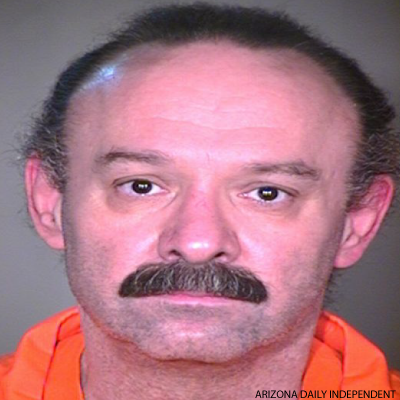
However, the report recommends that ADC “replace the existing two-drug option,” that was used in the Wood execution, and implement a three-drug protocol.
The independent review was commissioned immediately following the execution and resulted from concerns about the length of time required for the inmate to be pronounced dead and the reflexive breathing exhibited by the inmate prior to his death.
“The report is clear that the execution of inmate Wood was handled in accordance with all department procedures, which, as the report states, either meet or exceed national standards. It was done appropriately and with the utmost professionalism,” said Corrections Director Charles Ryan.
“This independent review concluded that at all times following the administration of the execution protocol the inmate was fully sedated, was totally unresponsive to stimuli, and as a result did not suffer. In fact, the Pima County medical examiner is cited as reporting that the breathing pattern exhibited by the inmate prior to his death is a normal bodily response to dying, even in someone highly sedated,” Ryan added.
The report’s key findings and recommendations include:
•There were “no breakdowns in the implementation of the process or the mechanical systems supporting the execution… Staff performance in no way contributed to the extended time lapse from initiation of the drug protocol to pronouncement of death. As noted the execution was not ‘botched’…”
•The Pima County medical examiner, who performed the autopsy, “offered no apparent explanation for the time lapse that occurred… The IV team leader (a licensed M.D.), medical examiner and an independent correctional health expert agreed that the dosage administered was sufficient to cause death in a relatively short period of time. All agreed that the dosage of midazolam would result in heavy sedation.”
•In regards to the use of the two-drug protocol as opposed to the one-drug procedure previously used, “discussion with other state administrators… indicate that many states are facing the same challenge as Arizona in terms of access to the preferred chemicals…”
•ADC Execution Protocols are “detailed, specific in terms of responsibilities, comprehensive in scope and provide guidance and direction for all elements of the execution process.”
•Following a review of the protocols of 10 other states, the report cites that ADC’s protocols “meets or exceeds the standards established by other states…”
•The ADC should review the Wood event with the IV team leader and toxicologists and “develop contingencies if a similar delay occurs in the future.”
•It is recommended that ADC continue efforts to obtain the drugs needed to “retain the one-drug option currently included in the protocol…”
•Further, it is recommended that ADC “replace the existing two-drug option” (used in the Wood execution) and implement a three-drug protocol that “has been adopted by at least four other (corrections) systems in the past year and is considered reliable and effective by those systems. Florida successfully utilized this drug protocol for eight executions in 2014…”
•If access to the drugs referenced in the three-drug protocol becomes problematic, “the ADC should consider (emphasis added) using the same mixture as utilized in the Wood case but at higher doses… Other state systems have adopted this enhanced dosage as a contingency in the event that preferred drugs are not accessible.”
Ryan concluded, “The work of this team demonstrates the commitment of the State of Arizona and the Department of Corrections to transparency and accountability.
Based on this report, I forwarded my assessment to Governor Jan Brewer that the state continue efforts to procure drugs for the one-drug protocol, and begin the process to adopt three-drug protocols, as opposed to utilizing a modified two-drug protocol.”
The independent review was conducted by a three-member team from Correctional Solutions, Inc., through its partner, CGL. The team was comprised of the former director of the corrections systems in both Illinois and Michigan, the former director of corrections in Nevada and Virginia, and a former Undersecretary for the California Dept. of Corrections and Rehabilitation.
Additionally, the report was reviewed by an independent correctional health care expert physician familiar with the administration of drugs during lethal injections. This individual is a board-certified Diplomate of the American Board of Internal Medicine and a Diplomate of the American Board of Quality Assurance and Utilization Review Physicians.