It has been months since the shooting death of LaVoy Finicum, at the hands of Oregon State Troopers, but the wounds remain raw for the family he left behind including daughters Tierra Collier and Arianna Finicum. The pain was evident last week, when the two young women shared their experiences since the shooting and their understanding of a man the federal government now describes as a domestic terrorist.
While Finicum’s daughters left no doubt, in their interview on the James T. Harris radio show last week, that their father was anything but a terrorist, government officials doubt the federal agents’ role in his death.
In early March, Oregon Gov. Kate Brown and Rep. Greg Walden called into question the actions of federal agents in the shooting death of Finicum. Brown released a statement in which she called questions the investigation raised about the actions of federal agents who were also involved “troubling and properly the subject of an ongoing investigation.” Walden said he was left “bewildered by the role of the FBI agents.”
According to the Los Angeles Times, an “elite FBI hostage rescue team is under investigation after one or more federal agents apparently lied or failed to admit that they shot at Oregon occupier Robert “LaVoy” Finicum during a fatal showdown in January.”
Despite the questionable actions, bitterness could not be detected as Tierra and Arianna talked about their father – not some occupier, or militant.
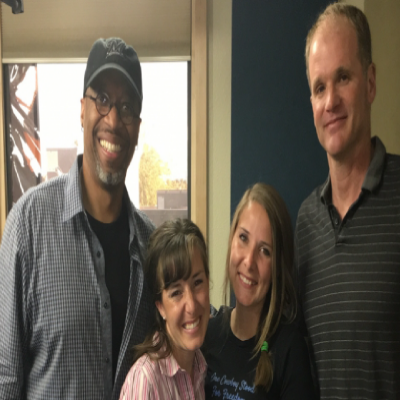
“The kind of narrative that is going through our country is that he was domestic terrorist, gun slinging and violent man. That is not my dad,” Tierra told Harris. “So I appreciate you letting us come on and saying what our dad was really like. He is a principled man. He is a gentle and diligent person. I often think of Steven R. Covey; not because they were both bald but because they lived by true principles. ‘Early to bed, early to rise.’ He exercised every day. I don’t know of many people that do that. He studied great works of literature. He studied the scriptures, words of God and he wanted to be on the right side of God at all times. He was my dad. I’m sure lots of girls would say that their dad was the best man they know, but that is my dad and I want to be just like him.”
Arianna explained that the two of them did not grow up on the ranch. LaVoy had only achieved his dream of owning a ranch after they left home to pursue their own lives. Because LaVoy wanted to have his 11 children raised in the lifestyle of a rancher, his children were steeped in ranching. “We did go to the bigger family ranch, said Tierra. “My grandparents are ranchers so we were always on the roundups and helping because that was the kind of lifestyle that he wanted for his children.”
Once their father realized his dream, according to his daughters, he became painfully aware of the liberties that were being stripped from him and other rural dwellers because of the federal laws limiting his ability to manage own property.
“He had noticed all of these years what had happened with his family, and once he had his own and he realized all of the red tape, stipulation and regulations,” explained Tierra. “It is on everything – and it is not just the ranchers. It is everyone. I want to be a midwife. There are regulations on everything. I’m sure in the radio business you have regulations about what you can say and can’t say and I feel that is a common thread in the world today. Government overreach into controlling our lives and taking away our liberties and freedoms.”
Still, according to the young women, LaVoy was not angry, or obsessed. When Harris asked if LaVoy would “talk about those pressures, frustrations with the life of a rancher and the regulations of government,” the women responded in the negative. “He didn’t,” said Tierra. “He had great relations with range cons,” referring to Range Conservation officers, “and all the people he worked with in the BLM. He had no issues with them. What he did see was that there was overreach. There were other ranchers that were having those rights taken from them. He wanted to stand by and support them. He saw that if they had the power to give, then they had the power to take away, and they shouldn’t have the power period.”
The fact that her father stood up not only for himself but his rural neighbors in the fight against the perceived injustices that Arianna wants people to remember about her father. Arianna reminisced, “That was one thing that my dad was always known for – and in grade school and stuff. He stood up for kids that were being bullied. He didn’t want anyone to be bullied and so when his neighbor, Cliven Bundy, was being bullied he said he had to go and stand up for them as well as the Hammonds in Oregon. That is what drove a lot of what he did.”
“I think it is every little girl, their dad is their hero. I remember growing up I remember thinking – I just wish all of my friends could hear all the things my dad is saying and all the things he taught me about the constitution and government. And so I always wanted my friends to hear that and now it is almost like a reality coming true with all his videos out there,” said Arianna. “So really I would like everyone to see from him, anyone who saw any of his videos – talking. Even reporters that would interview him. They would say he was a calm man. I want people to know that he was a good to the bone. He was good, his heart was good and the only reason that he did these things was to be selfless. He didn’t want to be greedy or anything. He wanted to stand up for my freedoms, your freedoms and everybody’s freedoms. I think that its really what I want to focus on for him that he just wanted to protect us. He cared.”
“I think that one thing to keep in mind that a lot of people don’t really realize is how important the land is not just to the ranchers but to everybody,” said Arianna. “Everything we own, everything we have and enjoy comes from the land. Our clothes, our shelter, our food, water. Everything comes to from the land, and while it may not be everyone’s calling to be a food producer or main source producer – it has to be done by the people and not just the government. If you control the food you control the people – and if only the government controlled the food then we would be slaves to the government. We need to maintain our freedoms.”
LaVoy was a devout Mormon, to whom “God was first and foremost,” according to Tierra. “Everything he tried to do was with God smiling and a good conscience before God. Then with family, he wanted people to get back to what mattered most. Prioritize your life. The freedom and liberty is so we can flourish in our family.” Tierra asked, “We want joy don’t we?”
LaVoy left his daughters with fond memories. The government agents did not leave them with bitterness or anger.
related article: Anti-grazing, Anti-Mormon Group Calls For Shooting Cattle, Targets Ranchers