
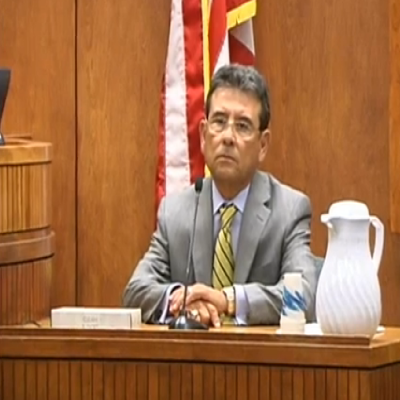
 The Tucson City Manager Richard Miranda is getting out while the getting is good. The double dipping former cop-turned-city-manager is heading for higher ground in Texas.
If Tucson City Councilman Steve Kozachik has his way, pension spiking will soon come to an end, and now that a new Governing Board is about to be seated at the Sunnyside Unified School District, Miranda’s cronies who have failed on the force or elsewhere in the City won’t have jobs created for them by his friends.
The gravy train is drying up. Tucson is broke. Although the A-10 and Davis Monthan just won a one year reprieve, there appears no evidence that community leaders are stepping up with an alternative plan to replace the $1.6 billion generated by D-M to the local economy that will occur with the eventual closure of the base.
Miranda was hired as permanent city manager in May 2012. He has been paid $202,000 a year, along with his pension from the police force of $135,887 a year. According to the Arizona Republic, Miranda benefited from pension spiking when he retired as Tucson’s police chief in 2008 by selling back unused sick leave. He received a $511,570 payment from the Deferred Retirement Option Plan.
The equivalent manager’s position in Albuquerque, a town of similar size and complexity, earns slightly over $75,000.
Miranda had to remain the city manager for one and a half years to be eligible to receive a second annual pension of $22,837.
In May 2012, Parade magazine named Miranda as one of the highest paid persons in Tucson, and they didn’t include his pension.
After attending Sunnyside schools, Miranda joined the Tucson Police Department in 1975. Miranda became police chief in October 1998. He retired from the Police Department at the age of 55.
Miranda was made interim manager when former city manager Mike Letcher was fired. The Council claimed that they wanted to conduct a national search. However, it was widely understood that Miranda had the job. At the time, Mike Rankin the City’s attorney, said 25 people applied for the job. He did not say if interviews were conducted.
The City Of Tucson’s hiring process is known to be as opaque as its spending practices.
Just last week, in a lawsuit against the City of Tucson by residents for the documents related to the proposed purchase of El Rio Golf Course, Pima County Superior Court Judge Christopher Staring ruled in favor of residents.
The judge found that the City misrepresented its action to the Court, when attorneys claimed in their July 8, 2013 Motion to Dismiss: “The City has now fully responded to Plaintiff s public records request, except that it has withheld approximately seven documents from release.” Staring wrote, “It is now clear that the July 8 representation was not remotely accurate. In fact, the record supports the conclusion that COT either knew the July 8 representation was false, or knew its efforts in response to Ms. Cruz’s request were so inadequate it could not have had any confidence in the accuracy of the representation. As discussed below, COT’s actions, including the July 8 representation, unreasonably expanded and delayed these proceedings to an extent necessitating sanctions pursuant to A.R.S. § 12-349(A).”
Staring found, “Clear and convincing evidence exists that COT engaged in “misconduct” sufficient to warrant relief pursuant to Rule 60(c)(3).”
As a result, Staring awarded attorney fees to plaintiff Cecelia Cruz in the amount of $15,800.00. In his ruling, Judge Staring noted that it was “important to reiterate that this case is about whether COT has complied with the access obligations imposed by Arizona law. It is not about the pros and cons of conveying El Rio to GCU. This is because the public records statutes impose transparency obligations in plain, neutral language.”
According to author J.T. Waldron, records that the plaintiffs did receive, “indicate the need to fully understand the extent to which city officials were forfeiting valuable assets for the benefit of wealthy investors. Using a dubious appraisal that ignored existing development and infrastructure of El Rio’s land, the city’s offer would have yielded a purchaser’s windfall of around 45 million dollars for a quantity of land that is five times the space needed to construct the university.”
Related article:
City of Tucson sanctioned in El Rio public records lawsuit
Miranda named Tucson city manager
Miranda’s recent testimony: