
The Coconino National Forest has released the Final Environmental Impact Statement (FEIS) and draft Record of Decision (ROD) for the Flagstaff Watershed Protection Project (FWPP).
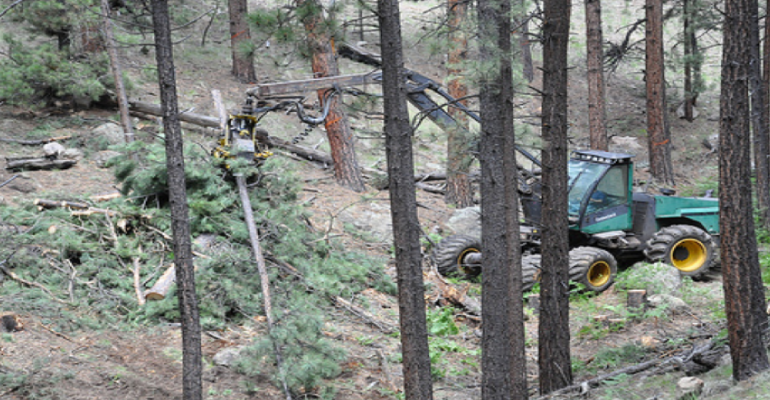
The decision authorizes the treatment of approximately 8,669 acres within the Dry Lake Hills and Mormon Mountain areas to reduce the potential for high severity wildfire and subsequent flooding. For the removal of cut material on steep slopes, the decision authorizes the use of helicopters on 566 acres, cable yarding on 414 acres, and specialized steep slope equipment on 250 acres within the Dry Lake Hills; and specialized steep slope equipment on 73 acres on Mormon Mountain.
No cable yarding will occur within the viewshed of Flagstaff or within Mexican spotted owl protected habitat, and the decision also incorporates the Large Tree Retention Strategy as modified in the FEIS. All treated areas would also receive prescribed burning treatments. The decision will also establish a permanent campfire closure order in the Dry Lake Hills.
In accordance with federal regulations, the Forest Service will offer a 45-day objection period on the draft ROD, which began with the publication of a legal notice in the Arizona Daily Sun on June 26, 2015.
Immediately after the 45-day objection period, the Forest Service will resolve objections during a 45-day objection resolution period before signing a final Record of Decision. The final ROD is anticipated for September 2015.
Implementation can begin after a final decision is signed. The Forest Service has also created an Implementation Plan to communicate the steps necessary to implement a project after a final decision is signed, including timber preparation, marking and contracting, as well as coordination with resource specialists and a recreation strategy.
“I am very glad to hear that we finally, after so many years of demanding fire prevention action, we have real activity on the horizon to treat highly flammable forests areas. While this promise under the Federal Environmental Impact Study (FEIS) does not go far enough, namely providing large scale fire fuels treatment, it is a start. Every time we have a massive forest fire like the Rodeo an Wallow fires, we lose critical habitat for both wild game, and the very endangered species that some organizations are trying to protect. And, we lose those creatures as well, killed by the very fire that destroys their habitat,” stated Arizona State Rep. Mark Finchem.
The Implementation Plan is available on the project website above, and also discusses the three phases of implementation for the project and includes an estimated timeline for those phases.