
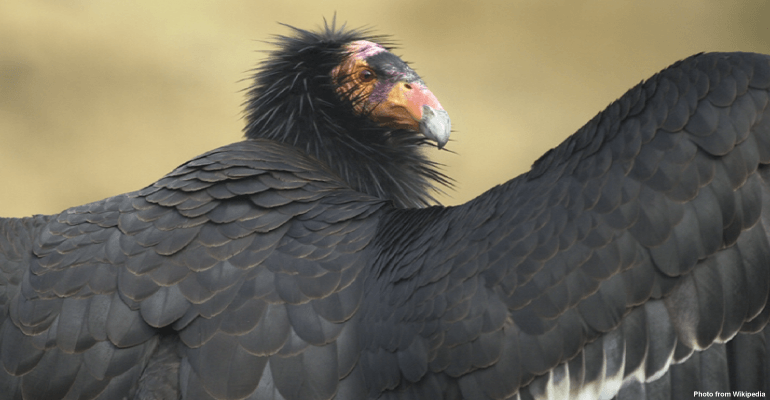
Once a year, people get a rare opportunity in Arizona that very few other places offer: to witness the release of endangered California condors into the wild. The public is invited to attend this year’s event on Saturday, Sept. 26 at 11 a.m. when previously-captive condors will be released at the Vermilion Cliffs National Monument.
This will be the 19th annual public release of condors in Arizona since the condor recovery program began in 1996. Condors are hatched and reared in captivity at The Peregrine Fund’s World Center for Birds of Prey in Boise, Id., and transported to Arizona for release to the wild. Condors chosen for release also come from the Oregon Zoo, Los Angeles Zoo and San Diego Zoo Safari Park.
The release coincides with National Public Lands Day, the nation’s largest hands-on volunteer effort to improve and enhance America’s public lands.
Condors were added to the federal endangered species list in 1967. It is the largest flying land bird in North America and weighs up to 26 pounds with up to a 9 ½ -foot wingspan.
There are now 70 condors in the northern Arizona – southern Utah population. However, lead poisoning remains the main obstacle to a self-sustaining population and the leading cause of death for the birds in this area. A number of scientific studies collectively provide strong evidence that spent ammunition is the primary source of lead exposure in condors. Condors ingest the lead fragments from carcasses and gut piles.
The world’s total population of endangered condors is 431, with more than half of them in the wild in Arizona, Utah, California, and Mexico. The wild California condor population declined to just 22 individuals in the 1980s when the program was begun to save the species from extinction. To view the condor release, drive north on Highway 89 out of Flagstaff. Turn left (west) onto Highway 89A toward Jacob Lake and the North Rim of the Grand Canyon. Drive about 25 miles past Marble Canyon until you turn right onto House Rock Valley Road (BLM Road 1065). Travel about three miles to a shaded viewing area on the right. On top of the cliffs to your east will be the location where the condors are released. The release site is approximately one mile from the viewing point. Several spotting scopes will be available to the public, although participants are encouraged to bring their own binoculars or spotting scopes for better viewing.
The condor reintroduction in Arizona is a joint project of many partners, including the Arizona Game and Fish Department, The Peregrine Fund, U.S. Fish and Wildlife Service, Bureau of Land Management, National Park Service, Kaibab National Forest and Utah Division of Wildlife Resources.
For more information on California condors, visit www.azgfd.gov/condor or www.peregrinefund.org/condor .