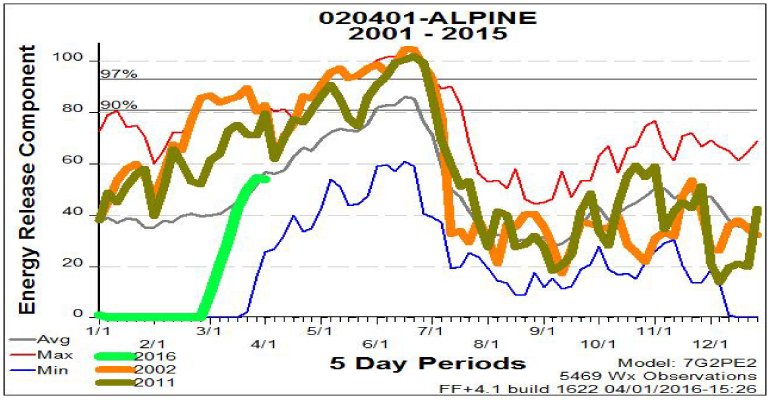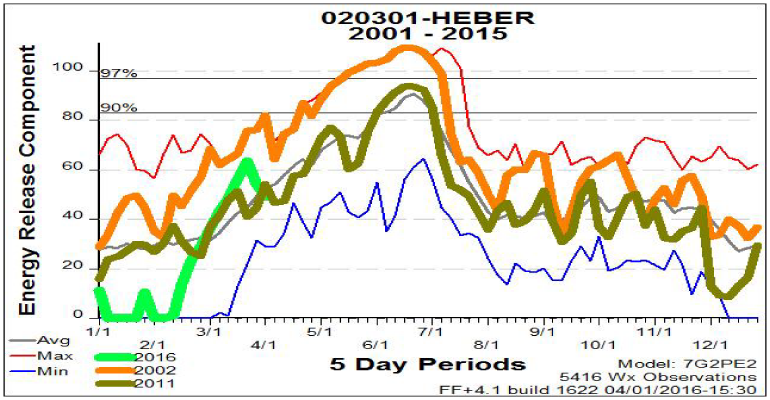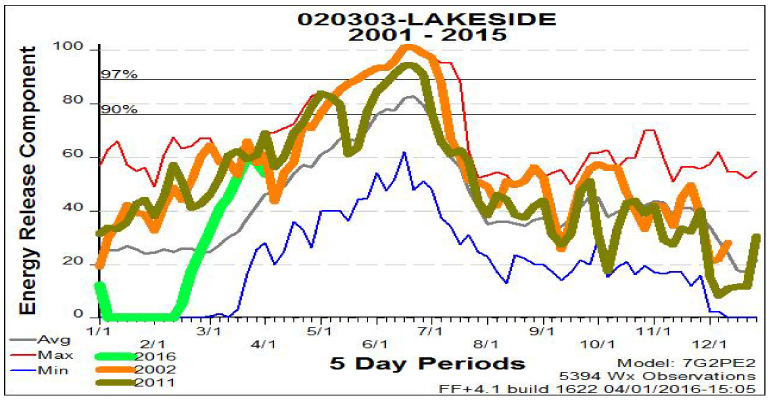
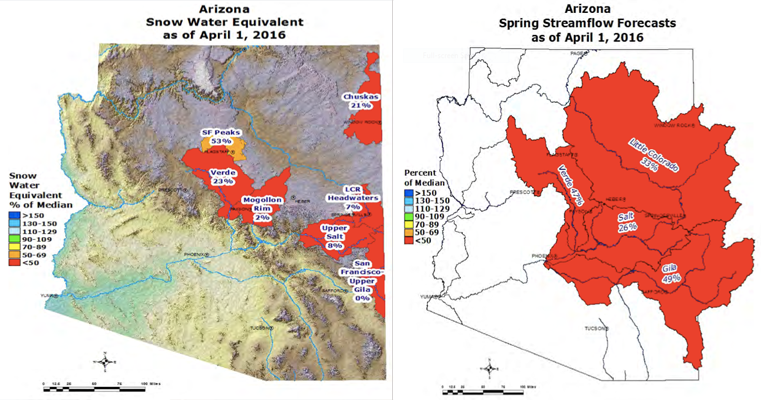
Experts are calling for intense forest thinning and water preservation measures due to the indicators for this year, as of April 1st 2016, that are very similar to the conditions present in during the Rodeo-Chediski and Wallow fires. According to Veritas Research Consulting, the assessment of danger is based on the Energy Release Component (EDC) and the Snow Water Equivalent.
Experts are calling for officials to improve surface water storage. One suggestion is to thin woody-biomass to more natural and sustainable levels. They call for ridding landscapes of overgrowth that alters surface run-off and absorption/sub-surface recharge rates. They believe those steps will contribute to abating impacts to surface runoff rates and air-shed quality issues from wildfire emissions.
Already this year, a human-caused Phoenix Fire burned approximately 500 acres due to mostly grassy fuels in the old Rodeo-Chediski burn area.
In June 2002, the Rodeo and Chediski Fires were separate fires burning about 100 miles east-northeast of Phoenix. Those fires merged over the June 22 weekend. By then, according to government documents, the blaze covered an area of over 410,000 acres and was threatening to consume the town of Show Low, Arizona.
Thousands of people were evacuated from the area, and over 6,000 firefighters from a number of state and national agencies battled the fire. The fire burned approximately 468,638 acres from June 18 to July 7.
The devastating results of the fire were the impetus for the Healthy Forests Restoration Act, which President George W. Bush signed into law in 2003.
According to the Forest Service, “the Wallow Fire started May 29, 2011, at the height of the Apache-Sitgreaves National Forests fire season….. The 2011 fire season was intensified by the combination of a lack of 2010-11 winter precipitation, and high loading of fine grass fuels remaining from the previous year….. The strong winds and extremely low fuel moistures resulted in mainly wind driven fire behavior, with the Wallow Fire making large gains within the first days of its’ origin. The Wallow fire burned over 535,000 acres in approximately 5 weeks, while during the last 25 years, acres burned on the Apache-Sitgreaves National Forests from both planned and unplanned ignitions totaled 581,000 acres. (Palmer, 2011)”