
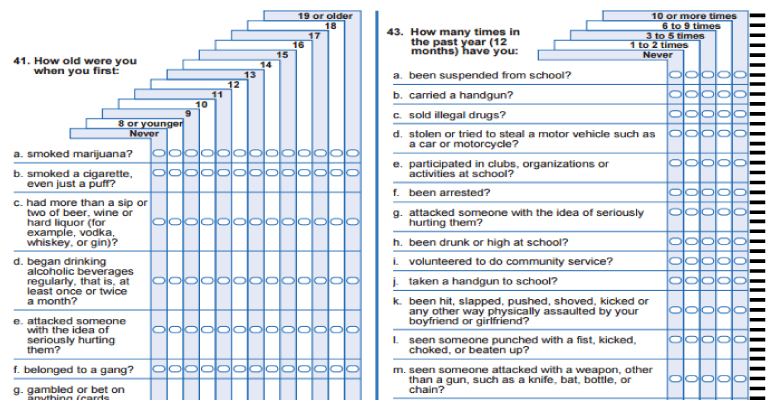
The results of the Arizona Youth Survey are in and they show that alcohol use is down and prescription pain reliever use is up. The survey was administered to a statewide sample of 8th, 10th, and 12th grade students during the spring of 2016.
The Arizona Youth Survey (AYS) was administered under direction of the Arizona Criminal Justice Commission’s Statistical Analysis Center to comply with Arizona Revised Statute §41-2416.
The Arizona Criminal Justice Commission is a state agency.
The AYS is the largest regular publicly sponsored survey of youth in Arizona. A large sample of students in public, charter, and correctional schools—chosen to reflect the state’s demographics, including grade, gender, and race and ethnicity—complete a questionnaire in class. The questions concern self-reported alcohol, drug, and tobacco use, gambling, firearms, gangs, school safety, family issues, and other matters. Data reflects substance abuse on at least one day in the 30 days preceding the survey.
Survey Findings/Highlights –
Problem Behaviors
These findings discuss some of the important attitudes and behaviors of Arizona youth who responded to the 2016 survey.
Alcohol Use in the Past 30 Days has continued to decline in Arizona; in 2016, 22.4 percent of youth reported drinking alcohol in the past 30 days, a decline from 24.1 percent in 2014, and from 28.1 percent in 2012.
Marijuana Use in the Past 30 Days was reported at 14.2 percent, a very slight increase from the 13.6 percent who reported using marijuana in 2014, but similar to the rate in 2012 of 14.3 percent.
Cigarette Smoking in the Past 30 Days among youth has continued to remain at a rate of less than one in ten who smokes regularly, with the 9.2 percent of youth who reported this in 2016 staying similar to the 9.4 percent in 2014, down from 12.9 percent in 2012.
Prescription Pain Relievers Use in the Past 30 Days was reported at 6.4 percent for 2016; this is an increase since the 4.7 percent reported in 2014, but is similar to the 6.2 percent reported in 2012.
Risk Factors
Bullying on School Property: When asked how often during the past 12 months they had seen bullying on school property, 38.9 percent of youth said they have seen bullying on school property at least once, and about 16 percent had seen bullying four or more times.
Attitudes Favorable toward Drug Use: On average, students had unfavorable views towards drug use. On a scale of 1 (very wrong) to 4 (not wrong), the mean was 1.55, and less than 5 percent of youth scored a 3 or higher, showing that youth believed it was wrong for someone their age to use alcohol, cigarettes, marijuana, or LSD/cocaine/amphetamines/illegal drugs.
Perceived Risk of Harm of Drug Use: Perceived risks of drug use showed a mean score that was towards the middle of the 1-4 scale at 2.31 suggesting that youth only perceived some moderate to slight risk for people using alcohol, cigarettes, marijuana, or prescription drugs without a doctor telling the youth to take them.
Protective Factors Interaction with Prosocial Peers: On average, youth responded that they each had an average of two best friends who had participated in positive activities in the past year. Participating in clubs, committing to staying drug free, trying to do well in and liking school are all positive attitudes and behaviors for youth.
Consequences
Rode in a Car with Someone Who had been Drinking Alcohol: The vast majority of youth practiced the safe habit of not riding in a car with someone who had been drinking alcohol, with only about 20 percent of youth reporting having ridden in a car with someone who had been drinking in the past 30 days.
ACEs (Adverse Childhood Experiences)
Adult Actions in the Home: Unfortunately, more than half of youth reported that in their lifetime, an adult swore at, insulted, or put them down. Such early childhood experiences are linked to negative health outcomes later in life.
School Safety Feel Safe at School: About 80 percent of youth agree or strongly agree that they feel safe at school. School safety can impact certain youth behaviors such as school attendance and bullying.